Emol: Environmental philanthropy: where it’s concentrated, who’s driving it, and why Chile is looking to take a new leap
This article is a translation of the original piece, originally published in Spanish in Emol.
More than US$78 million raised across 21 countries, 133,000 hectares of nature protected, and a binational biological corridor spanning approximately 1.6 million hectares.
The figures behind the Conserva Puchegüín campaign illustrate the scale that a new form of private-sector engagement in nature protection – environmental philanthropy – can achieve.
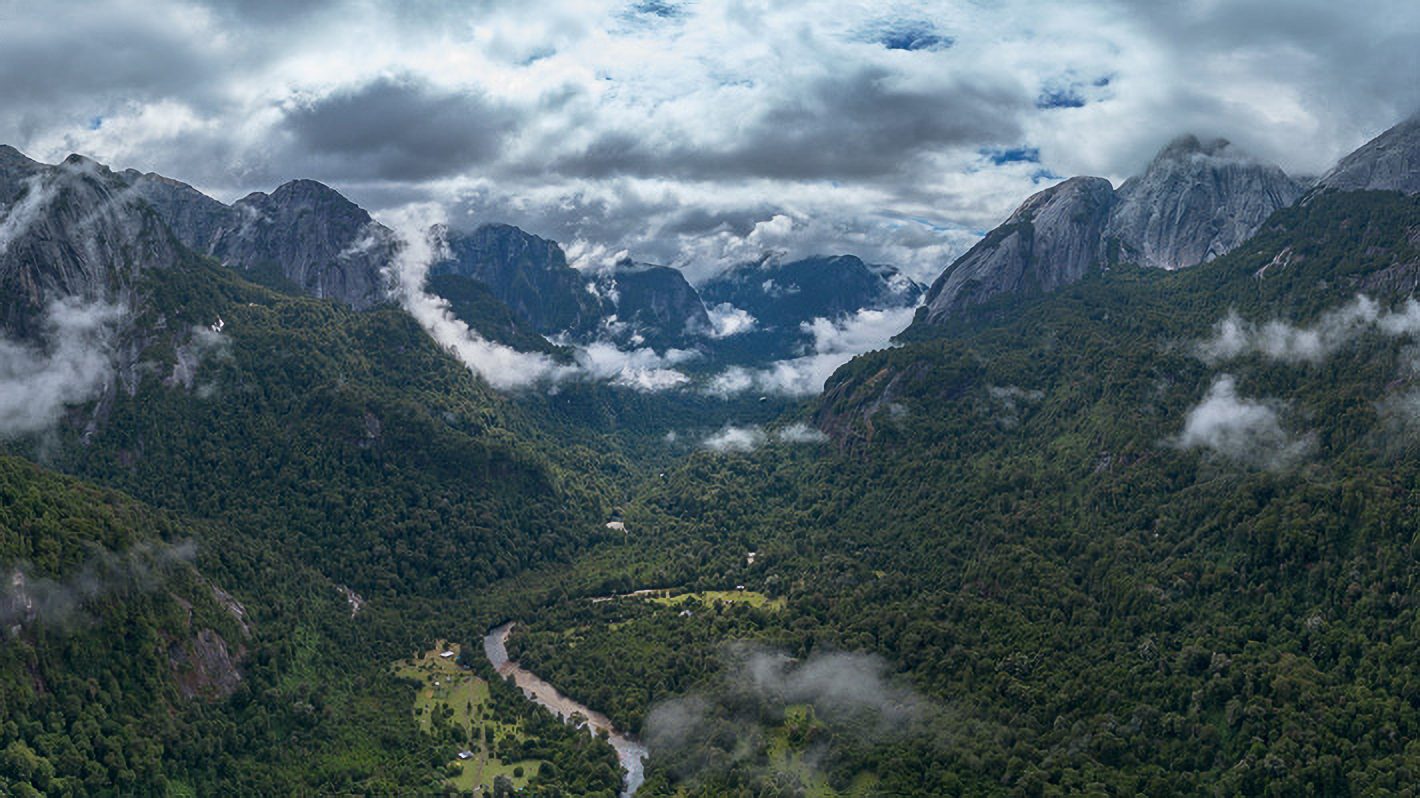
Led by the NGO Puelo Patagonia, the campaign secured the purchase of Fundo Puchegüín, the largest privately owned property in Cochamó, in Chile’s Los Lagos Region. The 58,000-hectare property, covered in primary forests, represents approximately one-third of the municipality’s total area and is home to threatened ecosystems and species, including alerce trees, huemul deer, pudú deer, colocolo opossums, and Darwin’s frogs.
But the transaction raises questions that go far beyond the purchase of a single property. Is Chile entering a new era of environmental philanthropy? Who is willing to finance it? What happens after a property is purchased? And, above all, can conservation move beyond its exclusive reliance on donations and become financially sustainable?
What is the state of environmental philanthropy in Chile?
According to José Claro, president of Puelo Patagonia, environmental philanthropy is still in its early stages, although there are signs of growth. “I think we’re seeing it begin to operate on a larger scale,” he told Emol, noting that conservation has become a more visible priority among the public in recent years.
In his view, one of the main obstacles is connecting projects in need of funding with people willing to support them. “Often, what’s missing is a connection between the needs of certain environmental projects and the people who want to contribute,” he explained.
Claro also pointed to the need for a more active role from the private sector. “There is still a great deal of room for development. The potential is enormous, and it’s something companies should be incorporating into their corporate strategies,” he said. The reason, he explained, is that economic activity depends directly on healthy ecosystems. “Without water, there is no Coca-Cola, no gasoline, no forestry industry, and no food.”
From the perspective of Arístides Benavente, a donor to Puelo Patagonia, Chile has already built considerable experience in this area. “I think environmental philanthropy in Chile has advanced tremendously in recent years,” he told Emol, highlighting the contributions of individuals, families, and foundations that have made it possible to protect landscapes that might otherwise have been lost.
However, he warned that the model is now facing a second challenge. “Buying a property is only the beginning. The much greater challenge comes afterward: ensuring permanent funding for its restoration, monitoring, and management.”
Anne Deane, president of Freyja Foundation, agreed that a cultural shift is underway. “Over Freyja’s eight years of work in Chile, we have seen growing interest and a stronger sense of responsibility for protecting the country’s natural areas among certain segments of the population,” she told Emol.
Is interest from the business community growing?
Conservation is increasingly becoming part of the conversation among business leaders and families with significant investment capacity. Claro sees a generational shift, with professionals from the corporate world looking for ways to engage in environmental work.
“We’re seeing a change among younger generations, with professionals from the corporate world seeking opportunities to work in the environmental sector,” he said. In his view, this shift helps bridge knowledge gaps and build trust between the private sector and conservation organizations.
Benavente also sees a change in the business community. “Yes, absolutely. I see much more interest than I did ten years ago,” he said. Part of this shift, he explained, reflects a new perspective on business legacy and a growing recognition that nature also has economic value.
“More and more people understand that nature is valuable not only for its beauty, but also because it has enormous economic value that we have yet to fully realize,” he said.
Deane has observed a similar transformation among high-net-worth families in the United States and Europe, where investment in companies with positive environmental impacts is beginning to grow. In her own case, she explained that creating Freyja meant redirecting part of her family’s philanthropic giving toward the environmental and climate crises.
“At the same time, Freyja has an investment portfolio that helps us finance our philanthropic initiatives,” she said. The foundation’s strategy combines direct contributions to impact-driven businesses with environmental criteria applied across its broader investment portfolio.
Where is interest concentrated, and which areas are most difficult to protect?
Patagonia remains one of the main focal points for private conservation, particularly because of the scale of its relatively intact ecosystems. “Patagonia continues to be the primary focus because it is one of Chile’s great natural treasures that remains largely intact,” Benavente said, identifying Aysén and Magallanes as particularly promising regions.
But the areas facing the greatest urgency extend well beyond Patagonia. Benavente pointed out that wetlands, central Chile’s sclerophyll forests, and numerous watersheds are under significant pressure.
The greatest challenges arise where conservation competes directly with economic activities that offer high returns. “The most difficult areas are usually those where land has high real estate or productive value,” he explained.
Claro, meanwhile, argued that there is no single priority area. “All of them!” he replied when asked which territories most urgently need protection, emphasizing that conservation efforts must represent different climates, geographies, and latitudes.
He also called for more diversified strategies. “Protecting just one area is not enough. We need to think about diversification,” he said, comparing conservation to an investment portfolio. “The way to conserve nature is to diversify.”
Deane added a geographic and social dimension to the discussion. Philanthropy is often motivated by a personal connection to nature. “Philanthropy tends to follow the places people feel emotionally connected to,” she noted.
What happens after a property is purchased?
One of the biggest misconceptions about private conservation is that purchasing land simply means closing it off and leaving nature to take care of itself. The interviewees argue that the reality is quite the opposite.
“That is precisely one of the biggest myths. Many people think conservation means buying a property, closing the gate, and letting nature do the rest,” Benavente said.
In reality, he explained, conservation requires ongoing management that can include ecological restoration, scientific monitoring, wildfire prevention, invasive species control, wetland recovery, reforestation, research, and collaboration with local communities.
“Modern conservation requires active, professional management. It is not about leaving nature to fend for itself, but about helping it recover its balance,” he summarized.
Claro shares this perspective and cautioned against equating conservation with preventing all human activity. “I believe conservation is not synonymous with closing an area off. Rather, it is about coexisting with development in ways that achieve conservation objectives and benefit surrounding communities,” he said.
The model envisioned for Puchegüín reflects precisely this combination of approaches. According to Deane, Fundación Conserva Puchegüín currently owns and manages the property, with several layers of protection in place. These include the legal structure of the foundation itself, a Derecho Real de Conservación (a legal conservation easement under Chilean law), and the ongoing process of incorporating the property into Chile’s National System of Protected Areas.
A seven-year conservation plan is also being developed. It envisions allocating up to 20% of the property to activities compatible with conservation, such as nature tourism and small-scale agriculture and livestock raising, while the remaining 80% would receive stricter protection.
Which countries are leading the way?
International examples of environmental philanthropy are concentrated primarily in countries where tax and legal mechanisms have made it easier to direct private resources toward conservation.
Claro pointed specifically to the role of financial incentives. “Where tax incentives exist, there is more philanthropy,” he said, arguing that public policy can play a decisive role in expanding these contributions.
The United States stands out as one of the leading examples. Benavente noted that the country developed private mechanisms to protect large areas of land early on, and that interesting initiatives are now emerging in Canada, Australia, New Zealand, Costa Rica, and Europe as well.
Deane, who grew up in the United States, highlighted the role national parks play in the country’s identity. “Conservation philanthropy has a long history there,” she explained.
She also pointed to the growth of the rewilding movement in the United Kingdom, which focuses on the active restoration of ecosystems. “Rewilding is based on the idea that nature can recover if given the opportunity,” she said.
Can conservation become financially sustainable?
Perhaps the greatest challenge facing Chile’s emerging environmental philanthropy sector is ensuring long-term financial sustainability. Purchasing land requires capital, but keeping it protected for decades demands a permanent source of funding.
“The challenge in conservation, and therefore in sustainable philanthropy, is financing each protected area,” Claro warned. For this reason, he argued that projects must begin with a management and financing model capable of ensuring their long-term continuity.
Benavente goes a step further, calling for a fundamental shift in the relationship between conservation and the economy. “We need to move from conservation funded by goodwill to conservation that can generate the resources it needs to sustain itself over time,” he said.
His vision is to develop a true “nature economy,” in which protected landscapes can generate and capture value from ecosystem services such as carbon sequestration, biodiversity, water regulation and infiltration, and nature tourism.
In this context, he highlighted the development of a Natural Asset Company (NAC), a model in which the conserved landscape itself is the asset, with its value tied to the ecosystem services it provides.
“I believe this model could bring about a profound shift. It would make it possible to attract private investment into conservation while aligning financial returns with the restoration and protection of nature,” he said.
Deane, meanwhile, emphasized that purchasing land is not the only available strategy. Another option is to strengthen legally protected areas that lack sufficient resources for effective management, or to acquire degraded land, restore it, and subsequently protect it.
The government’s role remains essential
Although environmental philanthropy focuses on the capacity of civil society and the private sector, the interviewees agree that the government has an important role to play in expanding these efforts.
Claro proposed measures such as raising donation limits, introducing tax incentives, and establishing public policies that facilitate private-sector participation.
“The government also needs to play a role in encouraging philanthropy,” he said.
The discussion is therefore shifting away from the question of who will purchase the land toward a broader challenge: how to build mechanisms that ensure conservation has lasting financial support while generating economic and social benefits.
The Puchegüín initiative demonstrates, on a large scale, what environmental philanthropy can mobilize. But its own supporters acknowledge that success will not be measured solely by the ability to raise the funds needed to purchase 58,000 hectares. The real test will be ensuring that the land remains protected, generates benefits for local communities, and becomes a model that can be replicated elsewhere.
Benavente summed up the fundamental challenge in one statement: “The real challenge is to build a model that makes it economically viable to keep these ecosystems healthy.”